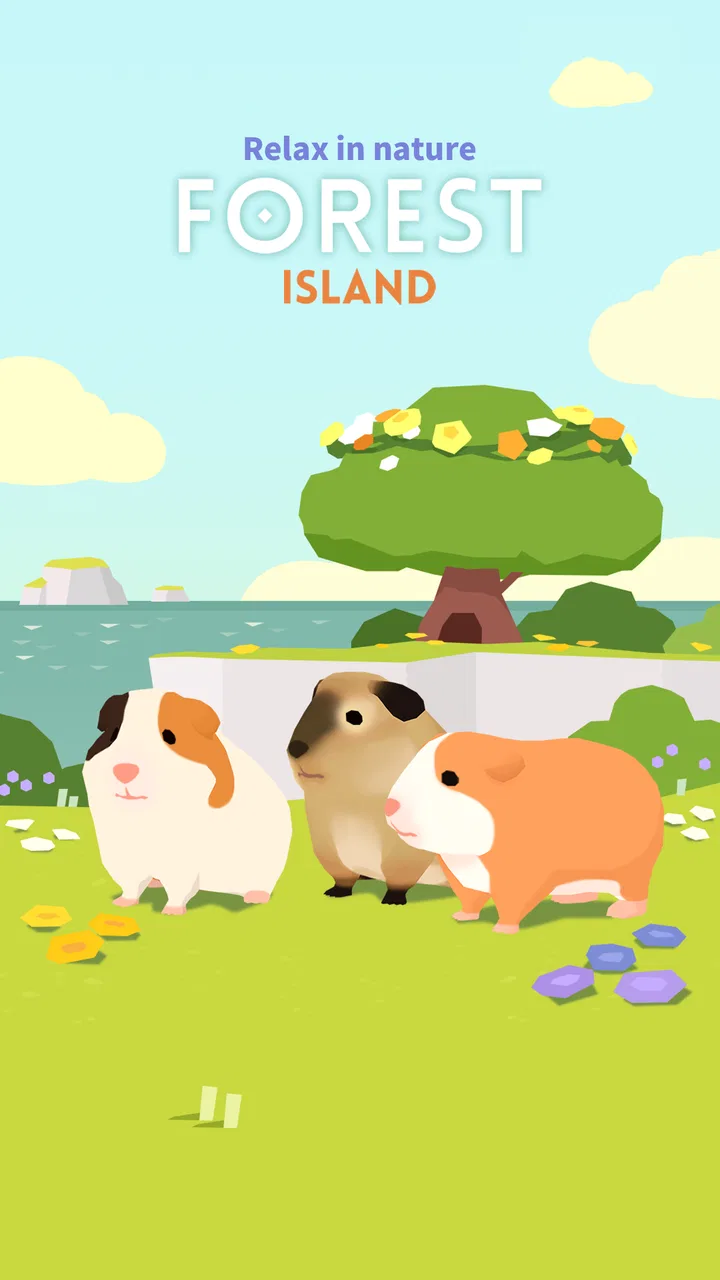
Forest Island: Relaxing Game
- 4.5
- Rating
- 5.00M
- Installs
- Free
- Price

 Analysis by App-foxy
I went into Forest Island: Relaxing Game expecting a quiet time-killer, and that is exactly where it works best. This is a free simulation game from Nanali Studios built around a simple promise: make a small natural world feel more alive, then return whenever you want a calm break. I collect animals, develop the island, watch the environment respond, and leave it running in the background of my attention rather than demanding constant concentration.
That distinction matters. This is not a management game where I am balancing complicated production chains, racing against opponents, or trying to prevent a disaster. It is closer to a gentle idle routine with decorative growth and relaxing sound design. The appeal comes from the rhythm of doing one small thing, seeing a pleasant response, receiving a reward, and having a reason to check the island again later.
After spending time with it, I would recommend it to someone who wants a low-pressure game for short visits. I would not point a player toward it if they need deep strategy, fast action, or a strong narrative. Its best quality is also its main limitation: Forest Island deliberately keeps the stakes low.
You May Also Like

 Blood Strike: 2.5 Anniversary
Blood Strike’s Loadouts Turn Every Drop Into a Tactical Gamble
A close look at Blood Strike’s custom loadouts: how fast access to signature weapons reshapes its battle royale rhythm, rewards preparation, and narrows the gap between fights.

 Pandora - Music & Podcasts
Pandora’s Music Is Easy to Start, but Harder to Recover
Pandora’s strength is its low-effort path from a seed to a station. Its weak spot is how much confidence it asks you to place in connection, setup, and quiet recovery.

 8 Ball Pool
 Is Built on Rivalries, Rematches, and Routine
A close look at the rivalries, rematches, shared routines, and unanswered safety questions that turn a quick pool match into a persistent mobile community.

 Samsung Music
’s Quiet Strength Is Playing What You Already Own
Its reach comes less from spectacle than from dependable access to a personal library. That simplicity is both the app’s strongest retention engine and its ceiling.

 AccuWeather: Weather Radar
AccuWeather Review: A Quick, Clear Forecast for Everyday Decisions
For everyday plans, the best forecast is the one you can understand quickly. AccuWeather makes rain timing, radar, and local conditions easy to act on, with a few trade-offs.

 Hill Climb Racing
Why Hill Climb Racing Still Turns Crashes Into One More Run
A tiny car, a bumpy hill and one more upgrade: Hill Climb Racing keeps resurfacing because its simple chaos makes every near-miss feel personal.
More From Our News Desk



How the island’s first action sets the tone
The first useful action is uncomplicated: I begin shaping the island and working toward a more populated, lively setting. Rather than throwing a long tutorial at me or asking me to master several systems immediately, the game establishes its mood through gradual progress. The island is the main character in practical terms. Every improvement makes the space feel more complete, while the arrival and collection of animals gives that progress an emotional reward.
I like that the game does not make the opening feel like a test of efficiency. In many simulation games, the first few minutes are spent learning which resource is scarce, which timer must be protected, and which upgrade will cause a chain reaction. Here, the early decisions feel more like arranging the pace of a retreat. I can focus on what looks pleasing and what gives me the next small objective instead of worrying that one imperfect choice has ruined the entire run.
The animal-collection element gives the island a practical purpose. I am not simply watching an empty landscape become decorative; I am working toward a place with more life in it. That gives the opening loop a clear direction without turning it into a checklist-heavy collector game. The cute presentation is not just decoration either. It makes each new addition feel like a visible change to the atmosphere, which is important in a title where the emotional payoff is mostly visual and auditory.
One useful habit is to treat the first visit as a setup session rather than trying to finish everything at once. I look around, identify the next available improvement, and then stop when the island feels settled. That approach suits the design better than repeatedly tapping through every possible action. The game is more enjoyable when I let its calm presentation do some of the work.
The “idle” part also changes how I approach it. I do not need to sit with the game continuously to feel that I am making progress. A short check-in can be enough to collect what has accumulated, improve the island, and decide whether there is a reason to stay. That makes it easy to fit into a morning routine, a commute, or a few minutes before bed, provided I am comfortable with a game that rewards patience more than constant input.
The feedback rhythm is the real feature
The core loop becomes clear after the first few actions. I interact with the island, receive a visible response, gather the resulting reward, and use that reward to continue developing the setting. Then I leave, let time pass, and return when the next small piece of progress is ready. The game does not need a dramatic event to make this satisfying. Its feedback is deliberately soft: a fuller island, more animals, a more pleasant scene, and the sense that my previous visit mattered.
This rhythm is why I think the game works better as a companion app than as a single long play session. When I open it after a gap, I have something to collect and something to improve. The return visit has a purpose, but not an obligation. If I only have a minute, I can make a quick check. If I want to relax longer, I can stay with the island and enjoy the atmosphere.
The sound design is part of that feedback rather than a separate extra. The ASMR-focused presentation helps turn ordinary progress into something soothing. I found that the audio matters most when I am using the game as a decompression tool. With sound enabled, the island feels more like a quiet space I am visiting. Without that layer, the underlying loop is still understandable, but some of the intended comfort disappears.
I would suggest using headphones when the goal is relaxation, but not treating the audio as mandatory. People who prefer playing mobile games silently can still follow the collection and development cycle. The difference is that the game then feels more like a visual idle simulator and less like a small soundscape.
A less obvious strength is that the feedback does not punish me for looking away. Many mobile simulations use pressure to force regular returns, and that can make a supposedly relaxing game feel like another responsibility. Forest Island’s appeal is stronger when I can come back because I want to, not because I am afraid of losing an opportunity. That makes it suitable for players who dislike daily streaks, competitive rankings, or aggressive timers.
There is a trade-off, though. Because the feedback is gentle, it can become predictable. The first rounds of improvement feel meaningful, but the emotional impact of another similar collection cycle may weaken if I play for too long in one sitting. My practical tip is to stop after a satisfying upgrade rather than pushing through the loop until it feels like work. The game rewards short, repeated visits more than marathon sessions.
Why collecting animals feels better than simply upgrading numbers
The animal focus gives progress a warmer identity than a standard resource simulator. In a typical idle game, the reward may be an abstract currency increase or a larger production figure. Here, the visible result is tied to a living island. I am encouraged to care about what the space contains, not only about how quickly a number rises.
That makes it a good choice for players who enjoy decorating, collecting, and watching a setting gradually become more inviting. It also explains why the game may appeal to someone who does not normally identify as a simulation fan. The systems are presented through a cozy environment, so the player can engage with progression without needing to enjoy spreadsheets or optimization.
I still would not describe the collection as a substitute for a deep creature-raising game. The pleasure comes from discovering and placing life within the island’s larger mood, not from managing detailed individual personalities or building complex relationships with every animal. Anyone looking for breeding systems, competitive collection, or extensive customization should keep expectations measured.
My preferred workflow is to use the next animal or island improvement as a stopping point. I collect enough to make a visible change, look at the result for a moment, and then close the game. That creates a complete mini-session: action, feedback, reward, and a clear pause. It is more satisfying than tapping until the available tasks run out because the island itself becomes the endpoint.
The presentation also makes this a reasonable game to share with younger players, at least in terms of tone. It carries an Everyone content rating, and its calm, cute approach is far removed from combat-heavy or frightening mobile games. Adults should still make their own decision about in-app purchasing on a shared device, but the atmosphere itself is approachable and non-confrontational.
The reward is calm progress, not mastery
The main reward in Forest Island is the feeling that the space is becoming richer because I returned and took care of it. That is a different motivation from winning. There is no need for me to prove that I am faster than another player, and the game does not have to turn every action into a high-score chase. I am rewarded with a more complete environment and another reason to revisit it.
This works especially well in everyday situations where I want a break without committing to a full game. For example, after finishing work, I might open the island while having tea. I can collect what has accumulated, make one improvement, listen to the atmosphere for a few minutes, and close it before the session starts feeling repetitive. The game fills that gap better than a competitive title because it does not ask me to become alert and aggressive when I am trying to unwind.
It is also useful as a transition between activities. A short visit can provide a mental reset after studying or before sleep, although players who find screen time stimulating at night may prefer to keep the session earlier. The game’s calm style helps, but it is still a mobile game with progression prompts, so it should not be mistaken for a dedicated meditation tool.
The free entry point makes experimenting easy. I can see whether the slow pace suits me without paying upfront. At the same time, the game includes in-app purchases ranging from $0.99 to $109.99 per item. That range is worth taking seriously even in a relaxing title. My advice is to decide in advance whether I am willing to spend anything, because idle games are designed around the temptation to speed up or extend progress.
I personally get more value from accepting the waiting rhythm than from trying to remove it. If I spend money, I would want it to support enjoyment rather than fix impatience. Players who dislike any purchase pressure should use the device’s purchase controls and approach the game as a free, slow-paced experience. The island is most relaxing when progress remains a choice, not a financial decision made in the middle of a tired evening.
The reward structure can also disappoint players who need constant novelty. A new animal or improvement is pleasant, but it does not automatically create a new challenge. Compared with a traditional city builder, the reward is less about solving a new planning problem and more about watching an attractive world expand. That is a strength for casual relaxation and a weakness for anyone who wants increasingly demanding objectives.
Why resetting a session feels natural
A good session has a natural reset point. I complete the next available action, collect the reward, observe the island, and leave. Nothing requires me to squeeze every possible tap out of the visit. The game can continue being part of my day without taking over the day, which is exactly what I want from an idle relaxation game.
That reset is important because the loop can otherwise become too passive. If I open the game without a small personal plan, I may collect rewards mechanically and close it without feeling much. I get more from deciding what the visit is for: unlock a new piece of life, improve the island once, or simply listen and look around. Giving each visit a modest purpose makes the repetition feel intentional.
I also recommend not judging the game by its first long session. The design is not trying to deliver its entire appeal immediately. Its satisfaction builds through return visits, and that means the right question is not “How much can I do right now?” but “Do I enjoy having this peaceful island waiting for me later?” If the answer is yes, the idle structure starts to make sense.
On the other hand, the reset will feel empty to players who want a clear campaign ending or a strong sense of completion. This is an ongoing island rather than a tightly authored adventure in which every session advances a plot. I would choose a story-driven game instead if I wanted characters, dialogue, and a sequence of meaningful conclusions.
The current version is 3.18.0, and the game supports devices running Android 7.0 or later. Those details make it accessible to many Android users, including people who are not using a recent phone. Still, performance and battery behavior can vary between devices, so I would keep the session length sensible if I am playing on older hardware. The game’s idle nature means I do not need to keep it open constantly to enjoy its central idea.
Where it sits beside other relaxing simulations
Compared with a conventional city-building simulator, Forest Island is much less concerned with efficiency. I am not laying out roads to solve traffic, balancing several industries, or responding to disasters. That makes it easier to understand and far less stressful, but it also removes the satisfying puzzle of optimizing a complicated settlement.
Compared with a farming game, it offers a quieter sense of care. I am not relying on a daily crop schedule, tool upgrades, or a large list of chores. The island grows through a lighter collection-and-development loop. Players who enjoy the routine of planting, harvesting, and planning several in-game days ahead may find this too limited, while players who find those routines tiring may appreciate the reduced pressure.
Compared with a competitive idle game, its strongest advantage is the absence of urgency in the experience I had with it. The island is not asking me to compare my output with someone else’s or to react quickly to a changing opponent. The downside is that competitive players may find the rewards too private and the goals too soft. There is no substitute here for the excitement of leaderboards or head-to-head progression.
It also differs from a pure relaxation app because it still gives me game-shaped reasons to return. I have actions to take and rewards to collect, so it can hold my attention more effectively than an ambient sound app. Yet it remains less calming than simply listening to music if I am the kind of person who becomes fixated on completing every available task.
Who should install it, and who should skip it
I think Forest Island is a strong fit for players who enjoy cute animals, gentle visual progress, idle mechanics, and short mobile sessions. It suits someone who wants a game to open during a break, someone who prefers collecting to combat, and someone who likes the idea of a small digital place that gradually becomes more alive. Its Everyone rating also makes its tone broadly approachable.
I would be more cautious recommending it to players who need strategic depth, constant interaction, or a clearly defined ending. It is also not the best choice for anyone who finds waiting-based progression frustrating. The purchase range may be another reason to skip it if even optional in-app spending makes a free game feel uncomfortable.
For new players, my best advice is simple: play in short sessions, use the sound when you want the full calming effect, and choose one visible goal before closing the game. Do not treat every available reward as a demand. Let the island’s slower pace work for you instead of trying to turn it into a productivity challenge.
Nanali Studios has made a simulation game that understands the value of restraint. It gives me enough interaction to feel involved, enough progression to make returning worthwhile, and enough atmosphere to separate it from a bare currency-collecting idle title. The experience is not endlessly varied, but it does not need to be for its intended audience.
In the end, the loop is convincing because each part has a clear role: I take a small action, the island responds, I receive a reward, and I reset the session before relaxation turns into obligation. That is the reason another visit feels appealing. With over 5 million installs and a 4.5 average from around 116 thousand ratings, it has clearly found a substantial audience for this style of play.
My verdict: Forest Island is worth trying if you want a free, gentle simulation that turns animal collecting and island growth into a calming daily ritual. I would keep expectations realistic about depth and repetition, and I would stay mindful of the optional purchases. For a quiet break rather than a demanding game, it is an easy recommendation.
FAQs for Forest Island: Relaxing Game
01What is Forest Island: Relaxing Game?
Forest Island: Relaxing Game is a peaceful mobile game focused on building and caring for a natural island. You can restore different habitats, attract animals, collect resources, and gradually expand your environment. Rather than offering fast-paced competition, the game is designed around relaxing visuals, gentle music, and simple interactions that make it suitable for short sessions or quiet moments.
02How do you play Forest Island: Relaxing Game?
Gameplay mainly involves restoring areas of the island, unlocking new regions, and inviting wildlife to live in them. You collect resources over time, complete simple objectives, and improve the natural environment through taps and upgrades. The controls are easy to understand, so no previous gaming experience is required. Progress continues at a calm pace instead of demanding constant attention.
03Is Forest Island: Relaxing Game free to download and play?
Forest Island: Relaxing Game can generally be downloaded and played without an upfront purchase. However, like many free mobile games, it may include optional in-app purchases for resources, bonuses, or faster progress. Some versions may also display advertisements. You can enjoy the main relaxing experience without spending money, although patience may be needed when waiting for certain rewards or upgrades.
04Does Forest Island: Relaxing Game require an internet connection?
The game may allow some basic activities to work without a continuous connection, especially when you are simply viewing your island or interacting with unlocked content. Nevertheless, an internet connection can be required for advertisements, cloud-related features, updates, purchases, or receiving certain rewards. Availability may vary by device and version, so offline functionality should not be assumed for every feature.
05Is Forest Island: Relaxing Game suitable for children and casual players?
The game is generally suitable for casual players because it uses straightforward controls, nonviolent gameplay, and a calm presentation. It can also appeal to children, although parents should review the listed age rating and supervise optional purchases or advertisements. The experience is especially appropriate for people who enjoy decorating, collecting animals, and watching a virtual environment develop without stressful competition or complicated rules.
Pros
- Beautiful nature visuals create a calming
- screen-friendly atmosphere.
- Simple tap-based gameplay is easy to learn without tutorials.
- Animal interactions add charm and make island growth feel rewarding.
- Relaxing sound effects and music complement quiet play sessions.
- Offline access makes it suitable for travel or limited connectivity.
Cons
- Progress can feel slow unless you watch ads or wait for resources.
- Repeated actions may become predictable after extended play sessions.
- Some features and rewards are tied to optional advertising.
- The relaxing pace may feel too passive for players seeking challenge.
- Device performance and battery use may suffer during longer sessions.

Forest Island: Relaxing Game
Gallery